Interview with Brandy Gray: How to found a community-first taxi service in Canada
The background
Niagara Region in Ontario, Canada is famous for tourist sights and wineries. For years, however, everyday mobility for locals in this area was far from glamorous. Legal, reliable transport options were limited, while underground, unregulated taxi services tried to fill the gaps with no proper licensing or oversight.
At the same time, one of the locals, Brandy Gray, struggled both to find decent employment and get around with her kids. What began as a personal challenge turned into Loyal Transportation, a licensed, community-focused company that now serves residents, visitors, and local institutions across the region.

Interviewer: Brandy, welcome! Could you start by telling us a bit about yourself and how Loyal Transportation was born?
Brandy: Sure. I’m a mom, first of all. My husband has lived in the Niagara Region his whole life, and I’ve been here for about 15 years. When we were starting Loyal Transportation, I was a struggling mom of many, trying to find work that could support a big family. At the same time, I had trouble finding reliable transportation.
What we discovered was that there were illegal underground taxi services operating in our area. People were clearly trying to solve their transport problems on their own, but everything was happening in the shadows: no structure, no clear rules, no real protection for passengers or drivers. We even started out by working for one of those companies. But over time, we realized “We can do this better. And we can do it legally.”
That’s how the idea for Loyal Transportation really took shape — creating a properly licensed, community-supporting service that could do, out in the open, what people had been piecing together underground.
Interviewer: You call Loyal Transportation a family company. Can you explain who else is involved in running it?
Brandy: We really did “sucker in” the whole family and a bunch of friends into this mission.
- My husband is an excellent spokesperson and was one of the original drivers, along with his brother David. They would go out on trips and, at the same time, spread the word that Loyal existed and that we were licensed to operate.
- Our son Logan is the accountant. He handles a lot of paperwork, taxes, cash-out corrections, and the financial side.
- Our daughter Sky became one of the youngest drivers in the region to hold a TNC licence in Niagara, and she also answered the dispatch phone for a while. Now she’s in Florida working in advertising — and we joke that she’ll be our “gopher” when we open operations there.
- Another daughter handles paperwork for the Niagara Region authorities, which are very demanding. There are a lot of regional requirements, so there’s constant back-and-forth to stay compliant.
And then we pulled in extended family and friends. The pitch was basically: “This is a great mission. Help the community. Help us help them.” So yes, it’s very much a family-built operation from day one.
Interviewer: Can you describe what your operations looked like in the very beginning?
Brandy: Chaotic. Very hands-on. I was taking phone calls constantly, sometimes while literally pushing kids through the snow, answering the phone while trying to be a present mom. I felt like I couldn’t even look my kids in the face or sing a lullaby without another call coming in.
At some point I realised that I can’t keep doing this by hand. That summer, I basically said: “We need a system. We need an app. We have to figure something out, because this isn’t sustainable.”
We started looking into building an app, checking loan options, hearing numbers like $30,000 for custom development. Which is a lot when it’s just you, your family, and a growing operation.
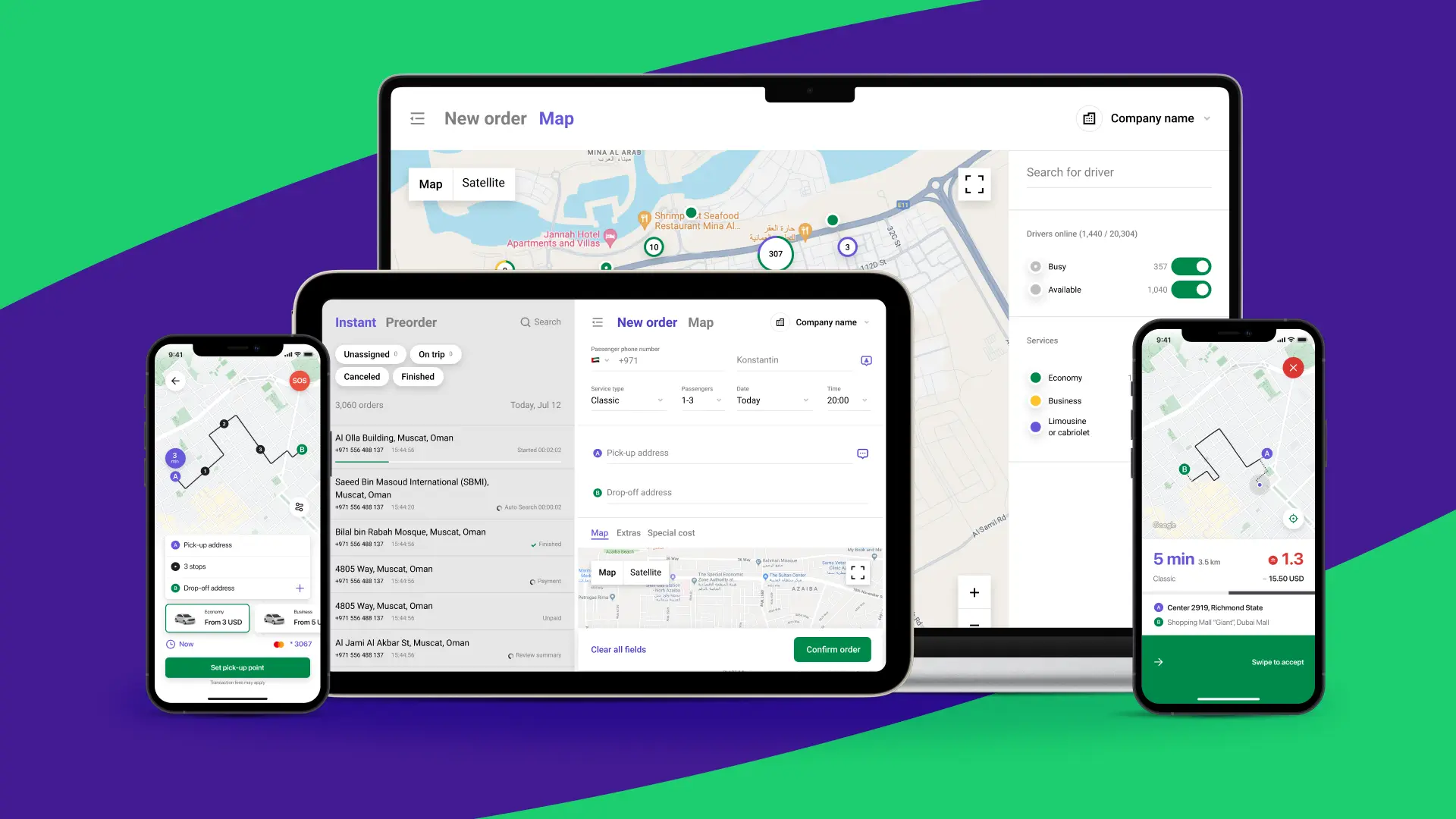
Interviewer: So how did you end up choosing Onde as your technology provider?
Brandy: At first, we tried the custom app route. We were driving some college students, and we hired them to build an app. They actually did build one, and it looked great. But when it came to making it live, they couldn’t manage the servers or handle a real-time production environment. I even tried to see if I could build my own app somehow, but it was just too technically complex and time-consuming.
Then another college student, Kevin James, who was riding with Loyal, told me he worked with a company called Taxi Startup (the earlier brand name of Onde). He said he could help get us onto the platform and manage the process.
Honestly, I might not have trusted it if it wasn’t a real person sitting in front of me, explaining everything. But at that point, I felt I had nothing else. So we went for it.
Interviewer: And how did your drivers react to this technology shift?
Brandy: It wasn’t easy. Some of our drivers were in their 60s, very reluctant to change phones. We still had people using flip phones, absolutely not thrilled about smartphones, apps, notifications. It was a culture shift, not just a tech upgrade.
But we worked through it in real time. I was there, managing drivers, customers, and the app all at once. Over time, they realised that the system actually made their work more structured and helped them get more consistent trips.
Interviewer: What did Onde change for your business once you were fully onboarded?
Brandy: A lot!
- We moved from manual chaos to structured dispatch and driver management. I could finally stop holding everything in my head and rely on apps and dashboards.
- During big community events, like grape and wine festivals when everyone travels from Niagara to the events, we can now prepare: we know we’ll be busy, we can plan drivers, and we can make sure customers are not left waiting.
- One of the biggest improvements for me is accountability. If a driver insists they were on time, I just check the system and can say, “Hmm, not exactly.” That allows us to coach drivers, improve service next time, and be fair to both sides.
Interviewer: You compare your approach to Uber’s. How do you see your company's role versus big ride-hailing platforms?
Brandy: We’re not trying to be a clone of Uber. We’re trying to be better for our community.
Unlike Uber, I don’t just automatically cancel a driver because of a report. I expect my drivers to have tools like dash cams, and I remind them: “You have the right to listen to the customer, and you have the right to record. Where’s your dash cam?”
If there’s a complaint, I look at the data, I listen to both sides, and I try to find out what really happened. The technology helps, but it’s not a replacement for human judgment.
I’m also very visible as an owner. If you want to complain to the owner — all right, you can. People leave Google Reviews, and they’re very happy to tell you what sucks. If something is wrong, I find out about it fast, and then I use the system data to dig into it and fix it.
So for me, technology is valuable when it helps me respond to real issues and take care of people. That’s the difference.
Interviewer: Brandy, what advice would you give to mobility founders starting out today?
Brandy: A few things I learned the hard way:
1. Know your laws and stay legal.
Don’t build your future on underground, unlicensed operations. Learn the regulations, work with your region, and build something that can last.
2. Use technology before you burn out.
If you’re answering calls while pushing kids in the snow and managing 25 drivers by hand, that’s not sustainable. A proper platform lets you breathe and grow.
3. Bring your people with you.
Your drivers, family, and team may resist change at first, especially if they’re not tech-savvy. Be patient, train them, show how it helps them, not just you.
4. Stay close to your community.
Be visible as an owner. Let people talk to you. Read the reviews. Use the data from your system to understand what’s really going on and fix it fast.
If you combine legal, professional operations with good technology and real community presence, you can absolutely build a strong mobility business even in a highly regulated, competitive region.
